

 Govibe Reseach
 PDFeditor With Ai
 Audio Studio
 Photoeffect
 Textediting With Ai
 Videoconverter
 Aispreadsheet
 Photostudio
 WatermarkRemover
 Govibe Music Studio
 Electronic frequency generator
 Audio Converter
 Software Download Page
 Govibe App Installation
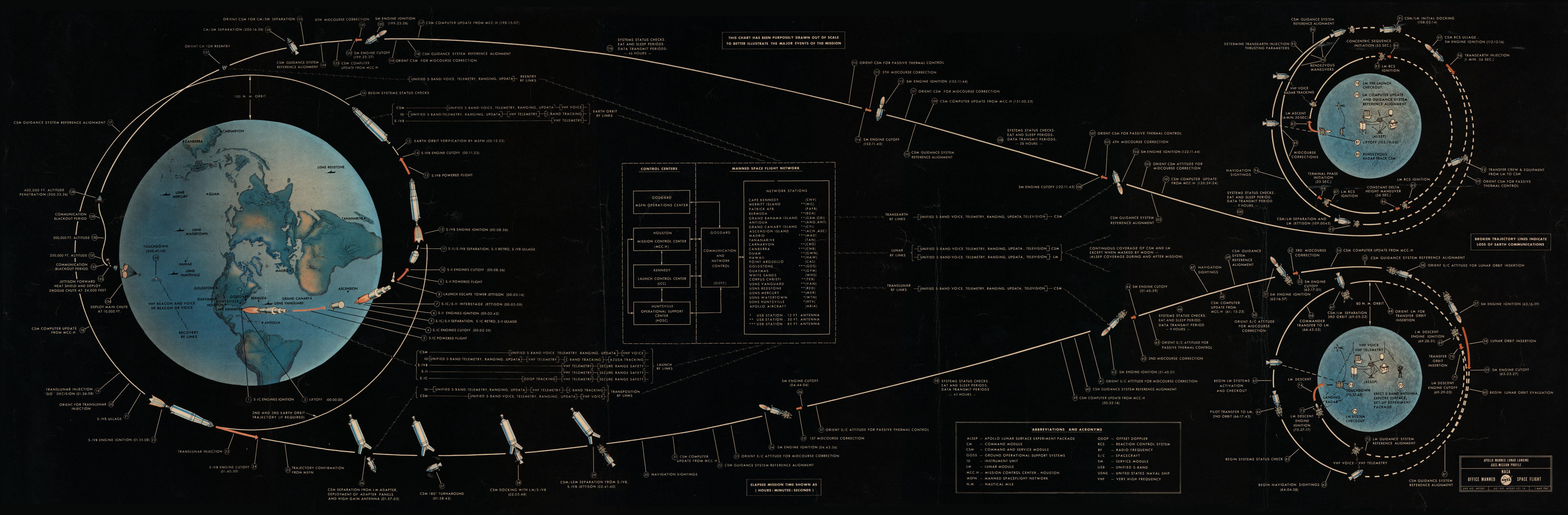
This is what it took during the Apollo Mission to send the first human on the moon they relied on Alignment system and correction system using regular computer updates from the
ALSEP "Apollo Lunar Surface Experiment Package" a unique set of Communication & Monitoring station these instruments were connected to a central station that transmitted data back to Earth, providing continuous monitoring of the lunar environment for years after the astronauts left.
VHF voice for astronaut communication, VHF telemetry for near-Earth data, and Unified S-Band telemetry ranging for deep space tracking. C-band tracking, Azusa tracking, and Opop tracking worked together to pinpoint the spacecraft’s position, while the alignment system and computer corrections from MCC-H (Mission Control Center) kept navigation precise.
It required HF and RF links, enduring multiple communication blackouts during critical phases like engine cutoff and ignition. Descent was guided by a landing radar in space, while radar tracking on Earth ensured mission accuracy.
This mission was done was commanded by the MCC-h which is the Mission control center.
They had Landing radar in space and radar tracking from the earth.
ALSEP "Apollo Lunar Surface Experiment Package" a unique set of Communication & Monitoring station these instruments were connected to a central station that transmitted data back to Earth, providing continuous monitoring of the lunar environment for years after the astronauts left.
VHF voice for astronaut communication, VHF telemetry for near-Earth data, and Unified S-Band telemetry ranging for deep space tracking. C-band tracking, Azusa tracking, and Opop tracking worked together to pinpoint the spacecraft’s position, while the alignment system and computer corrections from MCC-H (Mission Control Center) kept navigation precise.
It required HF and RF links, enduring multiple communication blackouts during critical phases like engine cutoff and ignition. Descent was guided by a landing radar in space, while radar tracking on Earth ensured mission accuracy.
This mission was done was commanded by the MCC-h which is the Mission control center.
They had Landing radar in space and radar tracking from the earth.
This is what it took during the Apollo Mission to send the first human on the moon they relied on Alignment system and correction system using regular computer updates from the
ALSEP "Apollo Lunar Surface Experiment Package" a unique set of Communication & Monitoring station these instruments were connected to a central station that transmitted data back to Earth, providing continuous monitoring of the lunar environment for years after the astronauts left.
VHF voice for astronaut communication, VHF telemetry for near-Earth data, and Unified S-Band telemetry ranging for deep space tracking. C-band tracking, Azusa tracking, and Opop tracking worked together to pinpoint the spacecraft’s position, while the alignment system and computer corrections from MCC-H (Mission Control Center) kept navigation precise.
It required HF and RF links, enduring multiple communication blackouts during critical phases like engine cutoff and ignition. Descent was guided by a landing radar in space, while radar tracking on Earth ensured mission accuracy.
This mission was done was commanded by the MCC-h which is the Mission control center.
They had Landing radar in space and radar tracking from the earth.